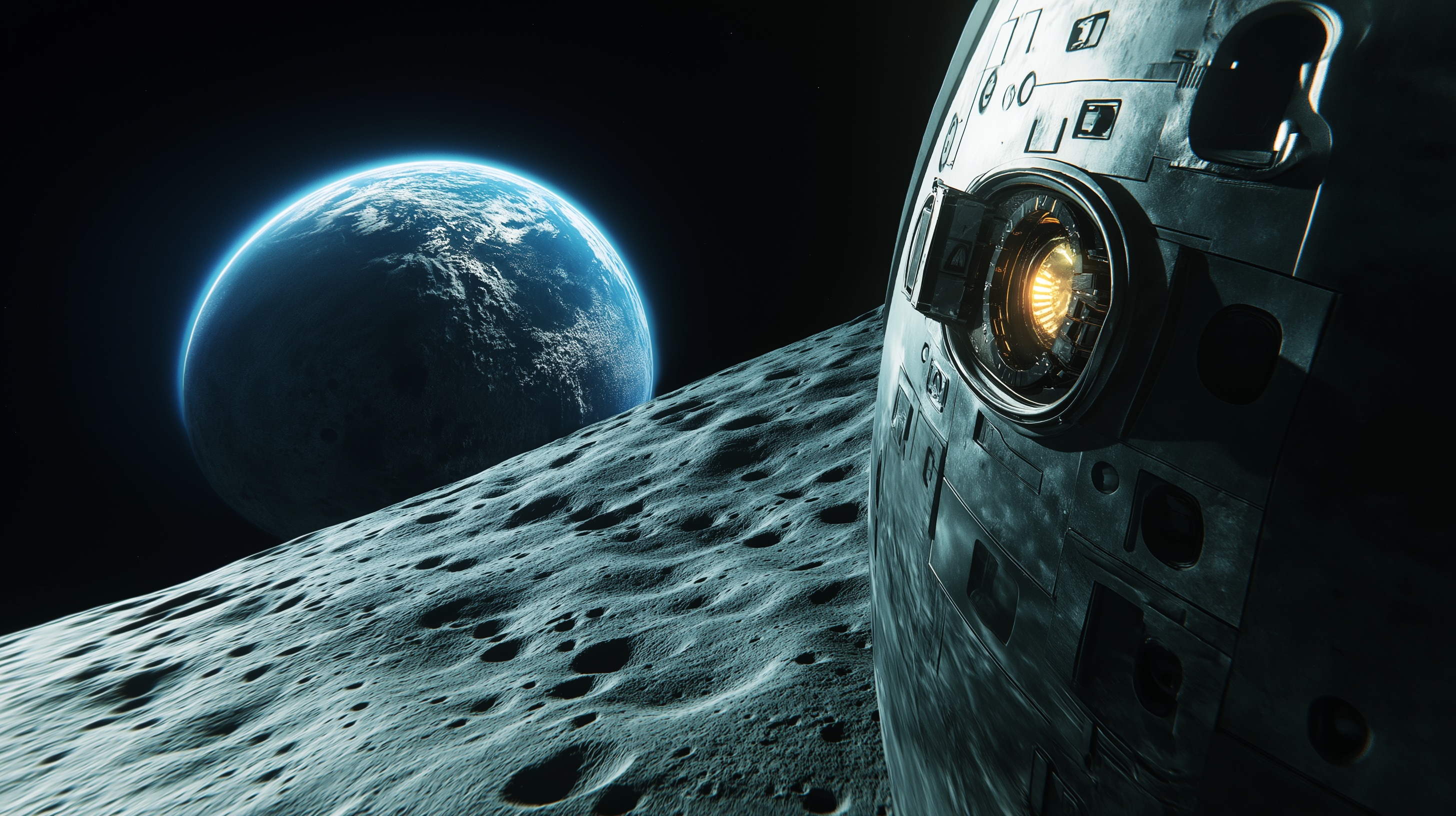
For the first time since December 1972, human beings are poised to leave the gravitational neighborhood of Earth and venture toward the Moon. NASA's Artemis II mission, currently targeting a launch no earlier than early March 2026, will send four astronauts on a roughly ten-day journey that loops around the far side of the Moon before returning safely to Earth.
The crew entered quarantine in Houston in late February, a standard protocol designed to limit their exposure to illness in the final days before a mission. Commander Reid Wiseman, pilot Victor Glover, and mission specialist Christina Koch — all NASA astronauts — are joined by Canadian Space Agency astronaut Jeremy Hansen. Together, they represent a series of historic firsts: Glover will become the first Black astronaut to travel to the Moon, Koch will be the first woman to make the journey, and Hansen will be the first Canadian to leave Earth orbit.
The Mission Profile
Artemis II is not a landing mission. Instead, the crew will ride aboard the Orion spacecraft, launched atop NASA's Space Launch System, the most powerful rocket the agency has ever built. After two initial orbits around Earth to check spacecraft systems, the crew will fire Orion's engines for a trans-lunar injection burn, setting them on course for the Moon.
The flight path will take the astronauts around the far side of the Moon — the hemisphere that always faces away from Earth — before the Moon's gravity slingshots the spacecraft back home. At its farthest point, the crew is expected to travel approximately 4,600 miles beyond the Moon's surface, potentially setting a new record for the greatest distance from Earth that any human has ever reached.
Building on Artemis I
The mission builds directly on the success of Artemis I, an uncrewed test flight completed in late 2022. During that mission, an unpiloted Orion spacecraft traveled more than 1.4 million miles over 25 days, demonstrating the viability of the hardware and flight systems. However, engineers noted some unexpected wear on the spacecraft's heat shield upon reentry, prompting additional analysis and testing before clearing Artemis II for a crewed attempt.
NASA conducted two wet dress rehearsal tests at Kennedy Space Center in early 2026, practicing the full countdown sequence and successfully loading more than 700,000 gallons of cryogenic propellant into the rocket's tanks. While engineers worked through some weather-related challenges during the tests, the overall results were positive enough to keep the mission on track.
A Stepping Stone to Bigger Goals
If Artemis II succeeds, it paves the way for Artemis III, currently planned for 2027, which aims to land two astronauts on the lunar surface near the Moon's south pole. That mission would represent the first human footsteps on another world in over half a century and open the door to sustained lunar exploration in the years that follow.
The Artemis program also carries a scientific payload called AVATAR, which uses organ-on-a-chip devices to study how the space environment affects human biology. The data collected during Artemis II will help researchers understand the health risks associated with deep-space travel, information that will be essential for any future missions to Mars or other destinations beyond the Moon.
As the launch window approaches, attention now turns to the final readiness reviews and weather assessments that will determine the precise launch date. For the four crew members in quarantine, the countdown to a journey that will write a new chapter in space exploration is well underway.