An international team of paleontologists has announced the discovery of a new dinosaur species found in the Saharan region of Niger. The creature, a large long-necked dinosaur with certain anatomical features not seen in previously described species, has been given the scientific name Spinosaurus mirabilis and appears to have been adapted, at least in part, for life in and around water.
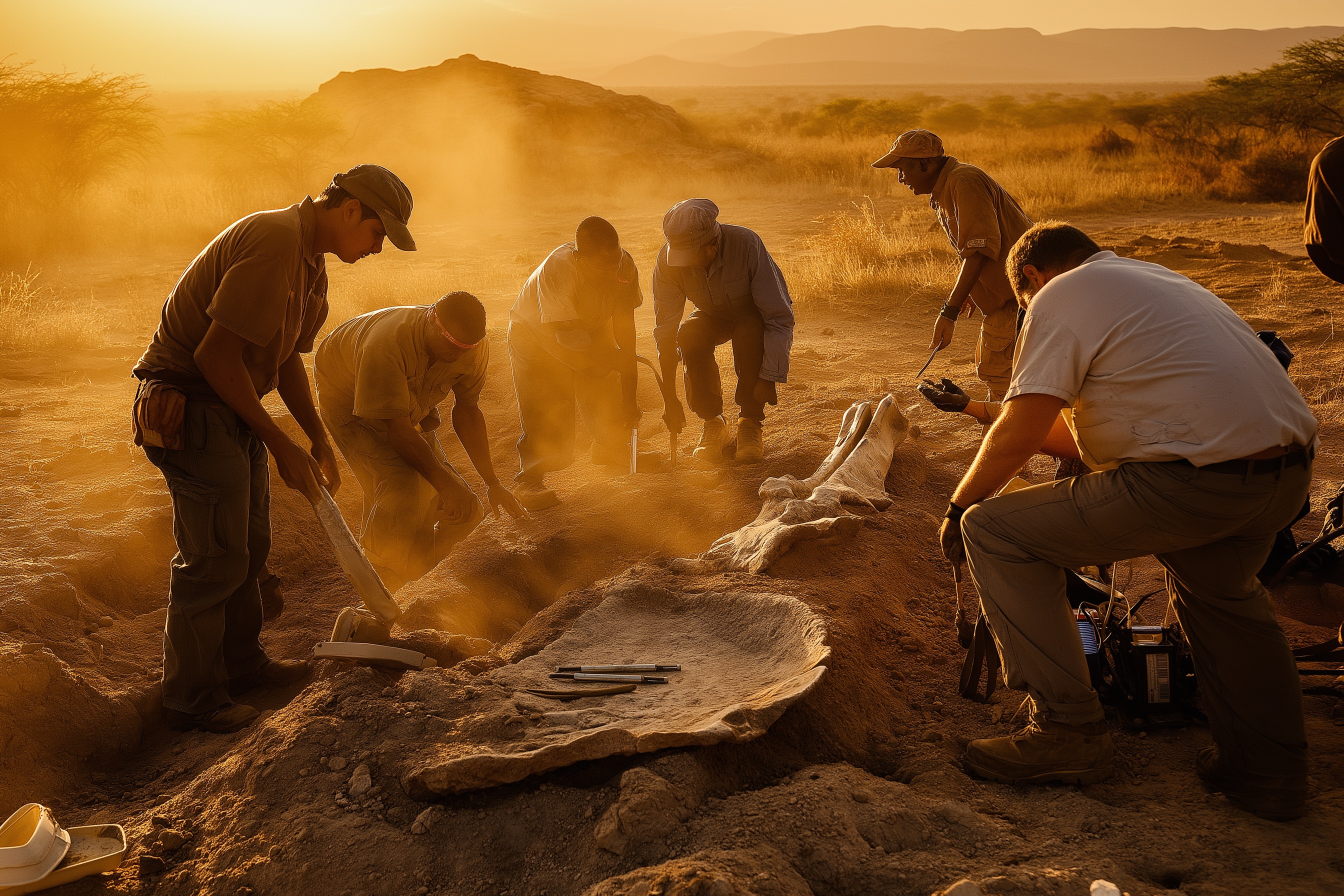
The discovery is the result of years of fieldwork at a dig site known as Jenguebi, where researchers uncovered an extensive collection of fossilized bones including a massive hind limb with a femur measuring nearly two meters in length. The size and structure of the remains suggest an animal of considerable proportions, consistent with other large dinosaurs known from the region during the Cretaceous period.
Evidence of a Water-Dwelling Giant
What makes this find particularly noteworthy is the combination of skeletal features that point toward a semi-aquatic lifestyle. Certain bone densities, limb proportions, and other anatomical markers observed in the fossils are consistent with an animal that spent significant time in aquatic environments, potentially hunting fish or other prey in ancient river systems that once flowed through what is now the Sahara Desert.
The concept of semi-aquatic dinosaurs has gained increasing acceptance among paleontologists in recent years, as more evidence has emerged suggesting that certain lineages were far more comfortable in water than previously assumed. This new species adds another data point to that growing body of research.
Collaborative Science Across Borders
The research team involved scientists from multiple countries and institutions, reflecting the collaborative nature of modern paleontology. Fieldwork in remote regions like the Sahara requires extensive logistical coordination, local partnerships, and sustained funding over many seasons. The team has indicated that additional material from the site is still being studied, with further publications expected in the coming months.